%20(2)%20(1).png)


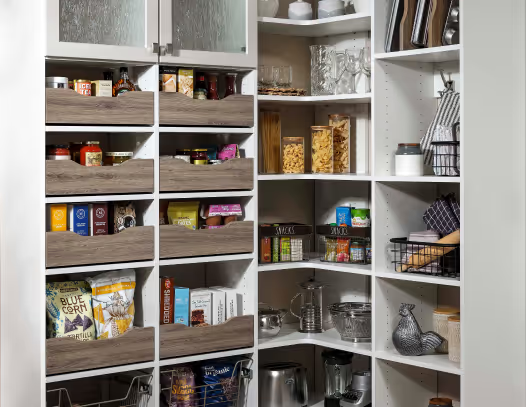
Ergonomic pantry storage solutions are design features that reduce physical strain during daily use—reducing bending, overhead reaching, and the need to move items to access what's behind them. The most effective ergonomic pantry layouts place frequently used items at waist-to-shoulder height, use pull-out mechanisms to bring items forward, and group categories in a way that minimizes search time. Complete Closet Design builds custom kitchen pantry storage for homeowners throughout the Chicago suburbs, including ergonomic configurations designed around how real families cook and shop.
After designing more than 300 projects across Chicagoland, one pattern shows up consistently in pantry consultations: the items that cause the most daily frustration are almost never stored at the wrong height by accident. They ended up there because the pantry was filled before any design logic was applied. Canned goods on the top shelf. Snacks in a bin on the floor. Cereal boxes stacked three deep on a middle shelf where the one you want is always in the back. The result is a pantry that technically holds everything but practically requires a minor excavation to use.
1. Pull-Out Shelves and Drawers
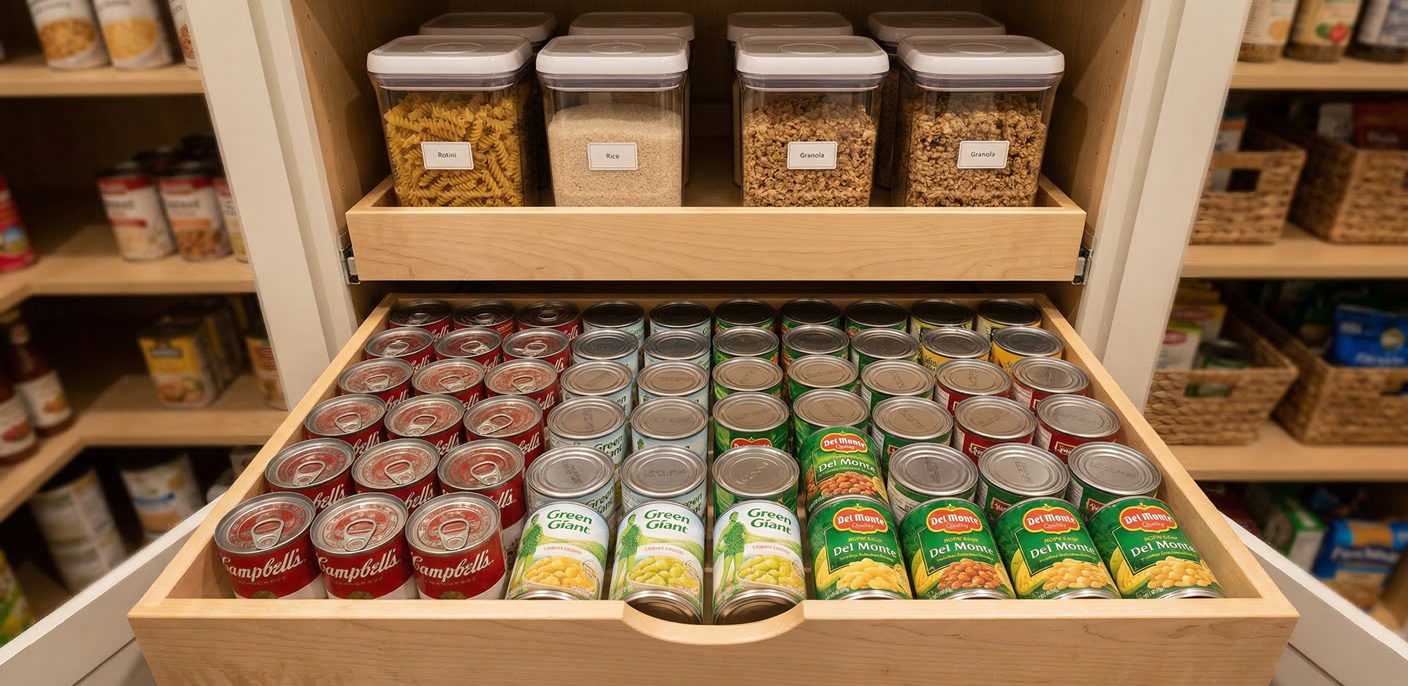
The single most impactful ergonomic upgrade in a pantry is replacing fixed shelves with pull-out shelves or drawers in the most-used storage zones. A pull-out shelf brings the back of the shelf to you rather than requiring you to reach past two rows of items to get to the third. For a Chicagoland household that cooks regularly, this removes a daily friction point that fixed shelving creates permanently.
Pull-out drawers work especially well for canned goods, which stack poorly and are notoriously hard to see when stored behind taller items. A deep drawer that can be fully pulled out reveals every can at once, eliminates the double-stacking problem, and makes restocking from a grocery run faster and more intuitive.
2. Waist-to-Shoulder Height Placement for Daily Items
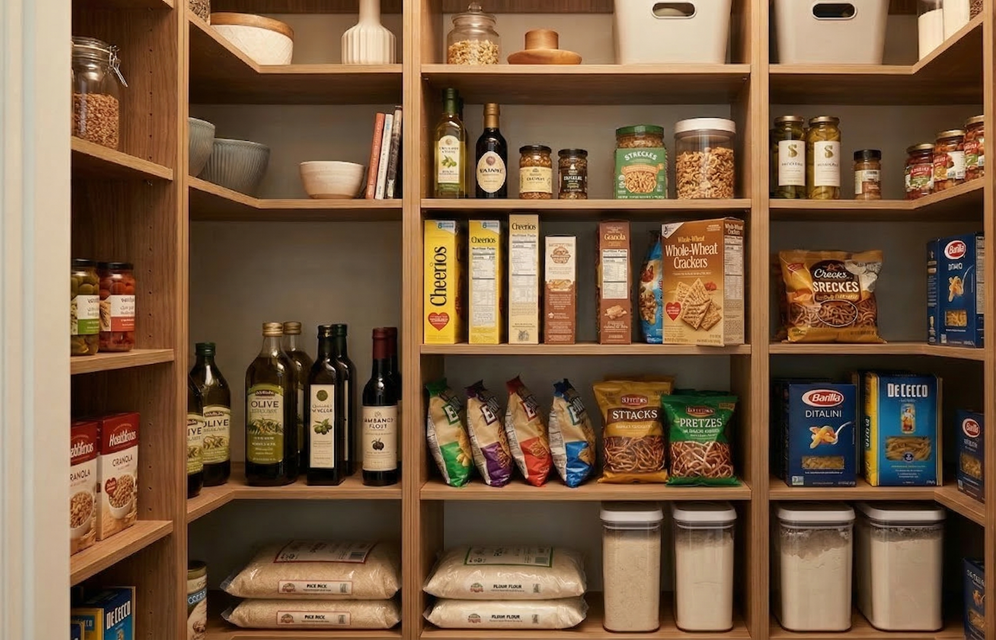
The ergonomic sweet spot in any pantry is the zone between roughly 24 inches from the floor (waist height for most adults) and 60 inches (shoulder height). Items stored in this range require no bending, no reaching overhead, and no straining. This zone should be reserved exclusively for the items used most frequently: everyday cooking staples, snacks, school lunch supplies, and frequently opened containers.
Items used less than once a week belong above shoulder height or on the lowest shelves, where occasional access justifies the less comfortable reach. This single principle of matching access frequency to ergonomic height resolves more pantry complaints than any other design decision. If you're rethinking your kitchen layout more broadly, our guide to minimalist kitchen ideas covers how the same less-is-more approach works beyond the pantry.
3. Door-Mounted Storage for Flat Items and Spices
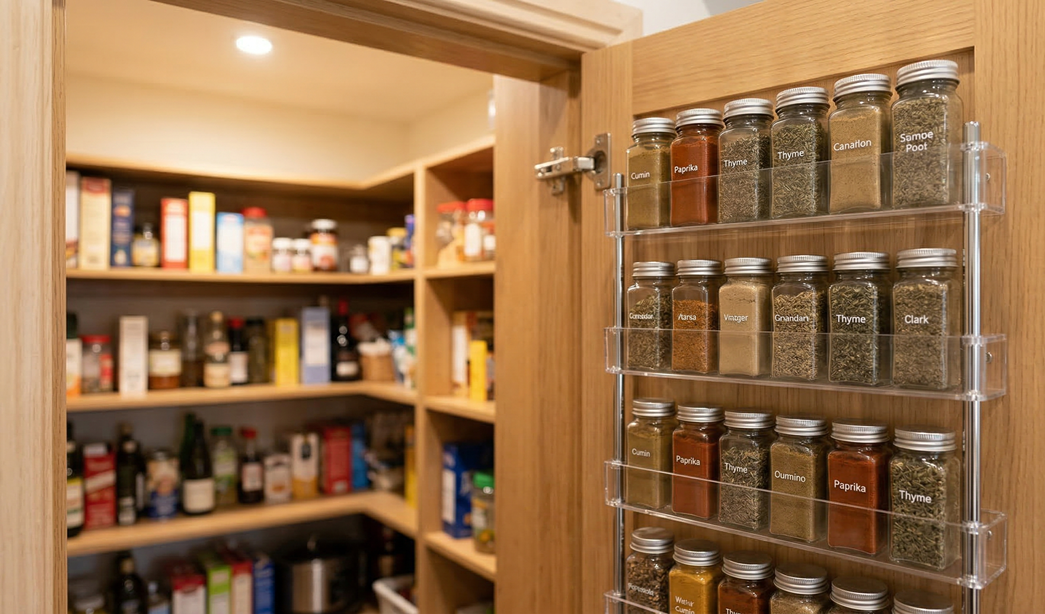
The back of a pantry door is among the most underused storage surfaces in most kitchens. Door-mounted racks add usable storage for flat items and spice collections without occupying shelf space. A door-mounted rack with individual labeled slots keeps the entire spice collection visible at a glance, arranged alphabetically or grouped by cuisine type. That alone eliminates the fumble-through-the-shelf search that a standard spice rack creates.
Door-mounted storage works best when the items stored are thin enough that the door can fully close without the racks making contact with the shelving. The same principle of matching storage depth to content applies across kitchen cabinetry. Our guide to kitchen cabinet materials covers how material choices affect what these configurations can support. This is a detail that determines whether a door rack is a functional upgrade or a source of new frustration.
4. Clear Containers for Dry Goods
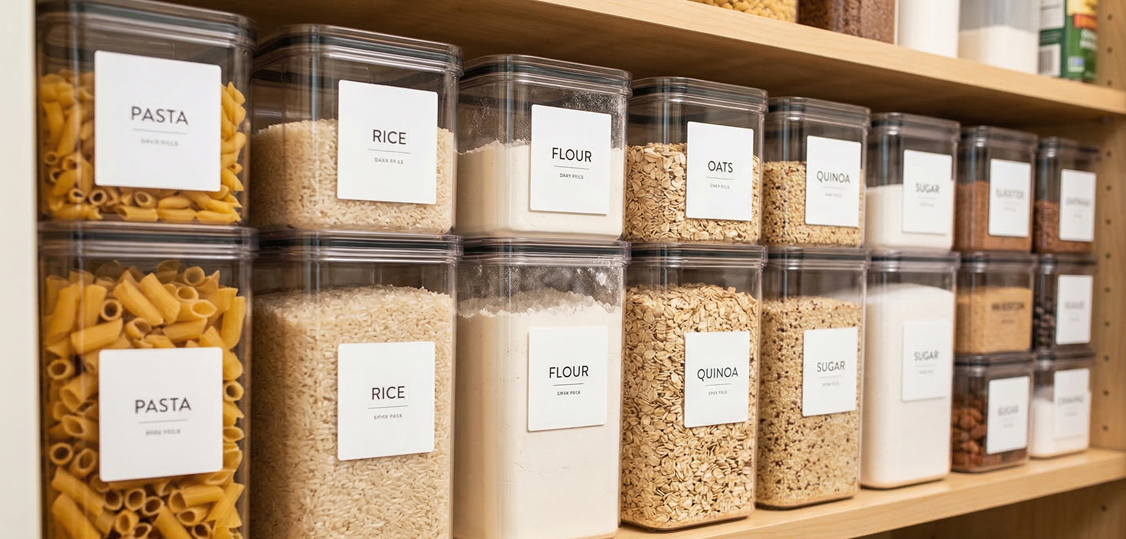
Transferring dry goods from their original packaging into clear, uniform containers eliminates the chaos of mismatched bag and box sizes that makes pantry shelves hard to organize and harder to search. Uniform containers stack cleanly, show fill level at a glance, and free up noticeably more usable shelf space compared to storing the same volume in the original packaging.
Labeled containers add a secondary organizational layer that makes delegating kitchen tasks easier. A child or partner who didn't do the shopping can find what they need without asking.
5. Adjustable Shelving for Evolving Needs
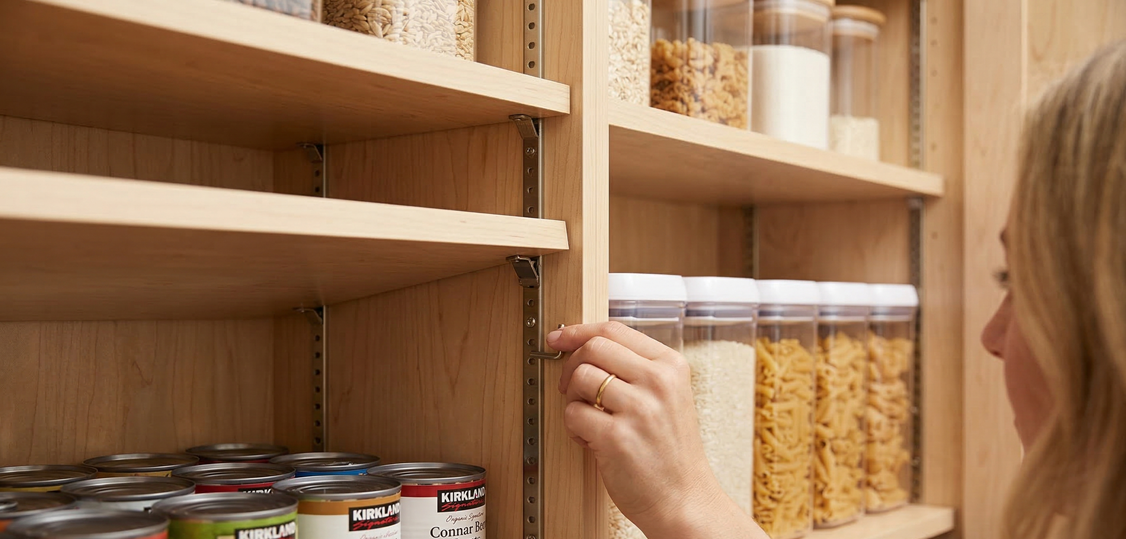
A pantry's contents change seasonally and over years. The pantry that worked in September looks different by December, and different again the following year. Fixed shelving that matched your life when the pantry was installed might not match it now. Adjustable shelving built on a standard shelf-pin system allows the layout to be reconfigured as needs change without a renovation.
Custom kitchen pantry storage from Complete Closet Design uses adjustable shelving as the default configuration because a pantry that adapts to your household over time is more valuable than one that was perfect at installation and inflexible afterward.
6. Dedicated Zones With Clear Visual Boundaries
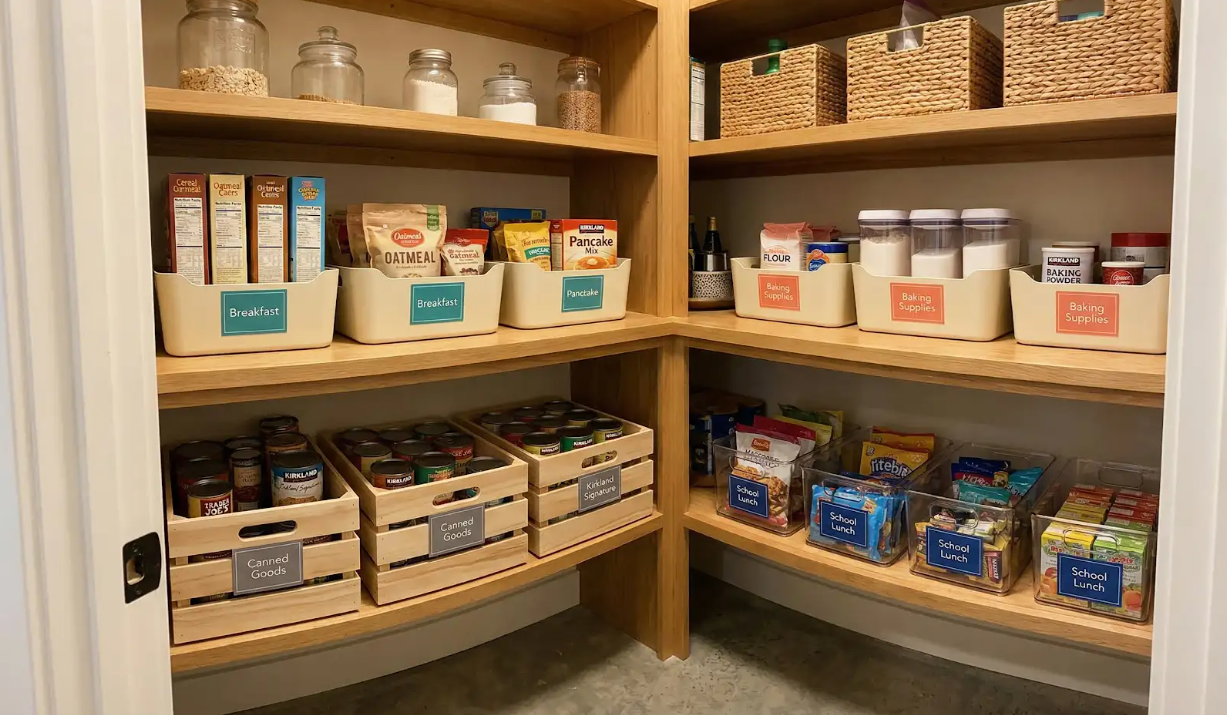
The final ergonomic layer is zone organization: grouping pantry contents by purpose (breakfast items, baking, canned goods, school lunches, cooking staples) and storing each zone in a consistent location. Zones work because they reduce decision-making on every pantry visit. You reach for the breakfast zone without scanning the whole pantry.
Clear visual boundaries between zones, whether labels, bin colors, or shelf dividers, make the system self-maintaining. When every item has a designated place, restocking becomes a matter of returning things to the right area rather than deciding where each item goes on every trip.
Frequently Asked Questions
What height should pantry shelves be for everyday items?
Pantry shelves for everyday items should be positioned between waist height (approximately 24 inches from the floor) and shoulder height (approximately 60 inches from the floor) for comfortable, strain-free access. Items stored outside this range (above the shoulders or near the floor) should be limited to things used less frequently, such as bulk supplies, seasonal items, or rarely-used appliances.
Are pull-out pantry shelves worth the added cost?
Pull-out shelves cost more than fixed shelves upfront, but they consistently reduce the most common pantry frustration: items hidden at the back of a shelf behind other items. For households that cook regularly, pull-out shelves in the most-used storage zones pay for themselves quickly in time saved and groceries not wasted. Complete Closet Design includes pull-out options in custom pantry designs for exactly this reason.
Does Complete Closet Design build ergonomic pantry storage in Naperville and the western suburbs?
Yes. Complete Closet Design designs custom pantry storage for Naperville homeowners and throughout the western and southwest suburbs. Every pantry project begins with a free in-home consultation to understand how your household cooks, shops, and uses the space before any layout is designed. Schedule your free consultation to get a pantry built around how you actually live.
A Pantry Built for Daily Life
An ergonomic pantry is a practical upgrade, not a luxury whim. Pull-out shelves, waist-to-shoulder placement for daily items, door-mounted racks, clear containers, adjustable shelving, and defined zones each address a specific issue that most pantries create unintentionally. When you apply them together in a custom-designed layout, the pantry stops being the room that slows down dinner and starts being the one that makes it easier.
Design Your Dream Workbench - Affordable Payment Plans Available!
Don’t let budget concerns hold you back. Design the custom workbench you deserve with our affordable payment plans. Start your project today!